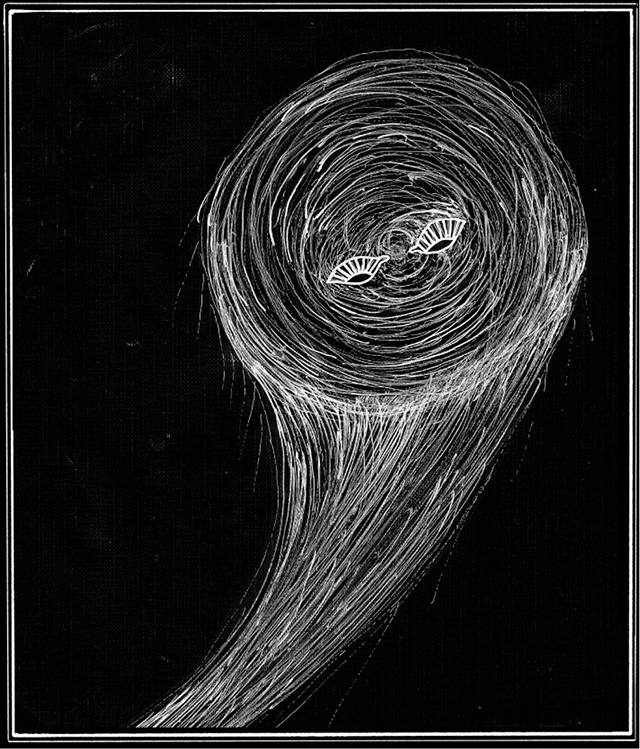
The Farasi Bahari is often found on lists of mythical Indian beasts compiled by foreigners. Sometimes, they even appear in lists of creatures from Hindu mythology. They are supposedly a species of long-maned, emerald green horses that live at the bottom of the Indian Ocean, where they graze on seaweed. They do not need to breathe air, and normally never surface.
In descriptions of this creature, it is claimed that ancient coastal people who owned regular land-dwelling horses would graze their animals close to the shore, in hopes that the Farasi Bahari would emerge from the ocean at night to mate with their mares. Horses with Farasi Bahari ancestry were believed to have extraordinary speed and endurance, and to be very long-lived.
The origin of this myth is murky. It is almost certainly not Indian. Farasi Bahari means “sea horse” in Swahili, which is spoken along the east coast of Africa; but the term is used in that language to mean the real animal — the fish with the prehensile tail — rather than any supernatural creature. It’s possible that the legend is of recent vintage, perhaps invented by someone foreign to both Indian and Swahili culture.
On the other hand, the description of the Farasi Bahari is similar in many respects to the mythological Hippocampus of ancient Greek and Phoenician mythology, which was half-horse and half-fish. Some dictionaries of mythology mention an Egyptian counterpart to this creature called Sabgariya. There are also parallels with the legend of the Cetea. It’s possible that during the Middle Ages, African merchants and sailors from the Swahili Coast brought tales of such beasts to India.
In Hindu and Buddhist mythology, a Timitimingala is a gigantic sea monster which can eat whole ships, as well as prey upon the largest whales.
The words “Timi, Timingala, Timitimingala” are often used together in Sanskrit to refer to a variety of enormous sea creatures. The Timi is a huge fish, perhaps a great white shark; the Timingala is a giant whale; and the Timitimingala is a fantastic creature much larger than both.
There is a Buddhist legend about a Timitimingala which terrorized sailors in the Bay of Bengal. It preyed upon ships, swallowing many trade vessels whole. When the crew of one ship found itself under attack, the crew members gathered together to pray, invoking the name of the Buddha. The Timitimingala heard their prayer and was instantly converted. It took a vow of ahimsa (non-violence), and from that point onward the leviathan ate nothing but seaweed. After it died, it was reborn as a monk and achieved nirvana.
Тимитимингала
В индуисткой и буддийской мифологии Тимитимингала — гигантское морское чудовище, которое может поедать корабли целиком, а также охотиться на самых крупных китов.
The Nishi or night spirit is one of the most feared ghosts of Bihar and Bengal. She manifests simply as a voice — Nishir Daak — that calls a person's name in the night when they are sleeping. If the person follows the voice, it leads them to a secluded place outside the house… and then the person disappears forever.
The Nishi can only call someone's name twice while they are inside. This is why you should never answer a call at night unless you hear your name called three times.
In some stories, the Nishi is a ghost of a dead mother who loves her child so much that she cannot bear the afterlife without them. So she calls them at night and leads them out to their deaths, either drowning them in a pond or hanging them by their neck from a tree.
Nishis are believed to be responsible for the phenomenon of sleepwalking.
Ниши
Ниши или ночной дух — один из самых страшных призраков Бихара и Бенгалии. Она проявляется просто как голос — нишир-дак — который зовет человека по имени среди ночи, когда тот спит. Следуя за голосом, человек оказывается в уединенном месте за пределами дома… и тогда исчезает навсегда.
Ниши может окликнуть кого-либо по имени лишь два раза, пока он находится внутри. Вот почему никогда не следует отзываться на ночной зов, пока вы не услышите, как вас окликают по имени трижды.
Deyyam is a Telugu word derived from the Indic word Dev. It is usually translated as “ghost”, though not all Deyyams are spirits of the dead.
In folk stories of Andhra Pradesh and Telangana, Deyyams have many attributes in common with the Hindi Bhoot. But there are some differences. While Bhoots can stretch their arms and legs to reach a great distance, the Deyyam prefers to do this trick with its tongue — extending its glistening, prehensile pink muscle into another room to adjust the volume on a radio, or to turn off the gas burner of a stove. Deyyams also have the ability to transfer their spirit to any other living thing through a bite or a scratch. Sometimes these scratches seem to come from invisible entities hovering in cool air, in which case they are called deyyam barukulu, or ghost scratches. Deyyams are susceptible to fire, and appear to die a second death if they are burned.
Thus, in one folktale, a marauding Deyyam who had been feeding on the livestock of a certain village was caught, and the villagers burnt it to death. Just before the ghost died, it managed to grab hold of a chicken and claw a gash in its side. The chicken then became a demon-chicken that laid cursed eggs, out of which hatched bizarre feathered Deyyams with human heads. The demon chicken was later caught and killed and cooked, and all those who ingested its flesh turned into Deyyams as well.
In the folklore of Mizoram, especially among the Hmar clan, a Chawmnu is a giant female demon with enormous breasts. She lives in the deep ravines formed by mountain streams.
Chawmnus are hungry always, but they are most active at dusk. They are known for stealing domestic livestock, and they sometimes eat humans as well. In many stories, they approach people who are cooking food outside and threaten them: “Would you like to give me what you’re cooking, or should I eat you up instead?”
People generally choose the first option.
Chawmnus are especially fond of drinking the blood of children.
If one is able to kill a Chawmnu, one should extract the brain, for it is said to have magical properties. For example, a bit of Chawmnu brain rubbed across the eyes can restore sight to a blind person.
Apasmara, also called Muyalaka, is a Hindu demon of ignorance and ego. He appears as a dwarf, and is usually depicted with his hands in the anjali mudra, or “namaste pose”.
One story goes that Apasmara was brought to life by a sect of powerful rogue sadhus. These ascetics, who lived in a mangrove swamp, created him in an attempt to kill Lord Shiva. But Shiva, in his avatar as Nataraja, began his cosmic dance — the tandava — and stamped Apasmara underfoot.
The demon can be seen in most images of the dancing Nataraja.
It is said that Apasmara can never be killed, so Shiva must stand on him for all eternity.
Reports of unexplained ghostly lights that flicker and move about in the dark are common the world over. The Latin name for these radiances is ignis fatuus, meaning “fool’s fire”. Scientists say they are photon emissions caused by the oxidation of methane and other gases released into the air by rotting organic matter.
But many witnesses refuse to accept this explanation, insisting instead that the lights are supernatural in origin.
In Bengali, they are known as Atoshi Bhoot or Aleya. They are most often seen over marshy areas and water bodies. Some say they are the ghosts of women who were burnt to death; others say they are the spectres of those who passed away with unfulfilled desires. Fishermen out late at night can get transfixed by the Aleya and follow them into muddy overgrown bogs, where their boats get stuck. The lucky ones manage to wade their way out onto solid earth. The unlucky ones are drawn further into the swamp to drown.
A brave person who keeps his wits about him can sometimes manage to catch an Aleya and chop it up into pieces. This is thought to be a merciful act, since it releases the spirit from torment.
In Kumaon, the phantom light is called Tola, and he is said to be the ghost of a bachelor. He is seen only on lonely hills, for the other ghosts refuse to associate with him.
In Kashmir, mysterious lights in the hills are thought to be the flaming eyes of the Bram Bram Chok.
In the traditional religion of the Malto people of Jharkhand and Bihar, who are also known as the Maler or Paharia, an Alchi is a fearsome evil spirit. There are various types. All Alchi are usually invisible, showing themselves only very rarely.
• Masani Alchi lives near the village graveyard and attacks people who pass by there at night. Women who come to the graveyard in the middle of the night and dance naked for this spirit’s pleasure are rewarded with supernatural power (see Churgin).
• A Pori is the ghost of a human man, woman, or child. It too lives in the graveyard, but sometimes wanders outside its boundaries wearing a dirty cloth. It appears black with wide white eyes. When a Pori attacks someone it causes gastric distress.
• A Jampori is the ghost of a demno or Malto shaman. After death, he goes to live at the base of a tree—usually a banyan—where he is sometimes seen around noon or midnight. He has long hair and gaint, round, fearsome eyes. He is especially dangerous to pregnant women. He carries a staff to beat his victims with.
• Dinde is a black ghost with yellow eyes who lives in mango trees. One account says it is the ghost of an unmarried woman who troubles men and women indiscriminately, while another says it is a male spirit who only molests women.
• Mara Kambe is another tree-dweller with long matted black hair, white eyes, and backwards-turned feet and hands. He is sometimes seen swinging through vines in the forest. Mara Kambe is very dangerous to pregnant women, whom he always attacks.
• Jame is another male spirit who lives on a black stone. He attacks both men and women, and also murders infants. He is propitiated with black chickens or black pigeons.
The Alakhani is a tiny pixie-like spirit that lives under the sheltering leaf of a plant called the alakhani-bah, which grows in thickets of bamboo. It is found in the northeastern state of Assam.
A female Alakhani is energetic and mischievous. She roams the jungle in search of fun. If she finds a man out walking by himself she will possess him for a lark, causing him to act bizarrely, wander off, and get lost. When the man comes to his senses (usually in some strange and embarrassing position, such as lying naked in a mud puddle, or strapped upside-down to the trunk of a tree), he might hear a tiny giggle as the quick-footed spirit dances off into the undergrowth.
Male Alakhanis are more rarely encountered, and this is lucky, for they are far less friendly. An attack by a male Alakhani can cause heartburn painful enough to knock a man unconscious, triggering lasting health problems.
The Ajaju is a species of man-eating monster from the Garo Hills of Meghalaya. These bizarrely constructed creatures have the heads of giant chameleons and the arms and bodies of monkeys, but their legs are like bamboo stalks — long, straight, stiff, and skinny. These legs cannot bend, for they have no knees.*
This makes it very difficult for Ajajus to walk on open ground. In forested areas, though, they can move quite rapidly by swinging from tree branch to tree branch.
The Ajaju makes a shrill call as it swings through the forest: “Wa-oh, wa-oh.” If any person mistakes this sound for a human voice, and calls back in answer, the Ajaju will come closer and closer until the person is near enough to attack.
An Ajaju has twelve long forked tongues which lash out from its mouth like ropes. As soon as these tongues make contact with the victim’s skin, the flesh starts to liquefy. The tongues constrict around the person’s half-melted body and reel it into the Ajaju’s mouth. Afterwards, the monster spits out the bones.
If you happen to encounter an Ajaju in a hilly forest, you should always run downhill, as the monster finds it quite difficult to follow on its kneeless legs. If you try to run uphill, the Ajaju is certain to catch you with its long, lashing tongues.
The bones of an Ajaju are thought to have magical properties. They are an ingredient in spells to reincarnate the dead. When fashioned into amulets, they offer protection against disease and evil spirits.
Зарегистрированные пользователи видят сайт без рекламы. А еще — добавляют комментарии без проверки, пишут в блог и на форуме, могут настраивать интерфейс сайта под себя.
Registered users see this site without ads, can add comments without pre-moderation, can write in the blog and on the forum, and can customize the site’s interface for themselves.
согласно локальному фольклору, обитающий в районе чилийского портового города Кокимбо, маленький гном, большой любитель злых шуток
Сейчас с нами на сайте 0 users и 360 гостей.
Приветствуем новых пользователей: Michaelfaw, reioo, Vexrazer.
Рекорд посещаемости был зафиксирован незримым летописцем бестиария в 23:04 11 сентября 2021 и составил 8942 человек (и представителей иных видов).
Все материалы, размещенные на сайте, являются интеллектуальной собственностью их авторов. Любая перепечатка допускается только со ссылкой на https://bestiary.us.
Коммерческое использование материалов с сайта без непосредственного разрешения правообладателей запрещено.
По вопросам сотрудничества и размещения рекламы обращайтесь по адресу kot@bestiary.us