А у тебя, Странник, какая группа крови? Тут интересовалась одна милая особа. Трехсот тринадцати лет отроду.
Bestiary.us
энциклопедия вымышленных существБыстрый переход
- Игра престолов Сага о мире Семи Королевств. О мире суровых земель вечного холода и радостных земель вечного лета. Мире лордов и героев, воинов и магов, чернокнижников и убийц — всех, кого свела воедино Судьба во исполнение древнего пророчества. О мире опасных приключений, великих деяний и тончайших политических интриг.
- Транслятор имен Здесь у Вас есть уникальная возможность узнать, как могло бы звучать Ваше имя на языках различных вымышленных рас. При этом результат имеет смысловую нагрузку. Так к примеру, эльфийские имена собираются по грамматическим правилам квэнья и других эльфийских языков исходя из значения Вашего настоящего имени.
- Мифы Ктулху «Мифами Ктулху» обычно называют мифологию, созданную Говардом Филлипсом Лавкрафтом, а также произведения других авторов по мотивам его работ, выдержанные в его особом стиле.
Гэя-нюдо
Гэя-нюдо — в японском фольклоре подземные человечки разером с ребенка, которые делают свои жилища под людскими поселениями
Geya nyūdō — according to the japanese folklore, small subterranean people who make their homes beneath human settlements
Гэя-нюдо — в японском фольклоре подземные человечки разером с ребенка, которые делают свои жилища под людскими поселениями
Geya nyūdō — according to the japanese folklore, small subterranean people who make their homes beneath human settlements
Гэя-нюдо — в японском фольклоре подземные человечки разером с ребенка, которые делают свои жилища под людскими поселениями
Гэя-нюдоВ японском фольклоре подземные человечки разером с ребенка, которые делают свои жилища под людскими поселениями по-русскиGeya nyūdōAccording to the japanese folklore, small subterranean people who make their homes beneath human settlements in english
Geya nyūdō —
Mushō —
Гейа ньудо —
Мусё —
げやにゅうどう —
下屋入道 —
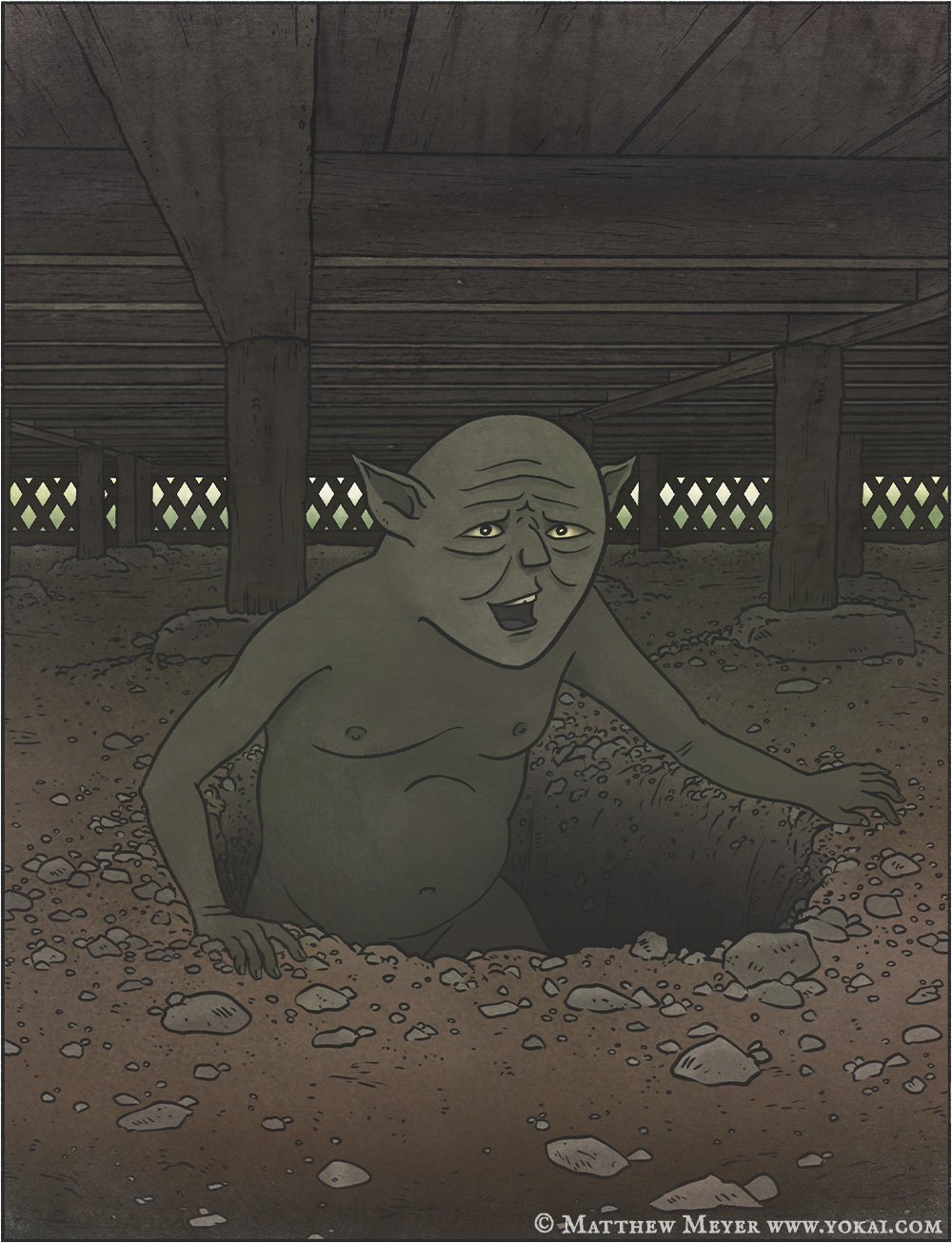
Согласно японскому фольклору, Гэя-нюдо — подземные человечки, которые делают свои жилища под людскими поселениями. Размером они, как дети, или даже ещё меньше, и почти всегда улыбаются. Гэя-нюдо живут в старых колодцах или в норах под зданиями. Когда хозяев нет дома, они пробираются внутрь сквозь половицы и съедают хозяйскую еду, а затем ускользают обратно до их появления.
Гэя-нюдо не враждебны и не приносят в дом несчастья, как некоторые ёкаи. Они стараются оставаться незаметными и редко общаются с людьми, хотя признаки их вторжения могут быть очевидны — они часто оставляют после себя немытые кухонные приборы, посуду и объедки. Хозяева обычно подозревают, что в дом вломились соседи или другие люди, чтобы украсть их еду. Но если они заглянут под половицы и обнаружат дыру в земле, то могут поймать гэя-нюдо с помощью ловушки или просто просунуть в дыру руку и схватить их. Если их ловят, они не сопротивляются. Вместо этого просто улыбаются тем, кто их поймал.
Гэя-нюдо — ёкаи хорошо известные в Кувана, префектура Миэ, а ещё, говорят, их можно встретить в префектуре Фукуи. Рассказ о гэя-нюдо можно найти в «Син кайдан самбон фудэ» — сборнике сказок времён Эдо:
Давным-давно жил монах-отшельник по имени Рёдэн. Однажды он собирался отправиться в дальний путь, поэтому плотно закрыл дом и запер дверь. Он вернулся после наступления темноты и обнаружил, что под его горшком для варки горит огонь. Он заглянул под крышку и с удивлением обнаружил, что в горшке варится рис. Рёдэн подумал, что должно быть над ним подшутили местные ребятишки.
С тех пор, каждый раз, как Рёдэн уходил из дома, вернувшись он находил остатки варёного риса. Иногда попадалась и разбросанная посуда. Когда Рёдэн рассказал об этом землевладельцу, тот был уверен, что это работа кицунэ. Они собрали несколько человек и отправились на поиски лисьей норы. Подняв татами и половицы, они обнаружили глубокую яму. Внутри сидел маленький монах, который выглядел лет на 80, а его рост едва достигал 90 сантиметров.
Землевладелец выволок священнослужителя из ямы. Тот посмотрел на всех и ухмыльнулся. Монаха стали расспрашивать, но он только улыбался в ответ и, казалось, ничуть не смущался. Собралось несколько молодых парней, и они решили убить странное существо. Но потом один старик распознал в нём гэя-нюдо и вспомнил историю из своей юности. Подобное существо появилось в доме правителя провинции Этидзэн. Пока оно играло в саду, некий самурай выстрелил и убил его. Старик объяснил, что существо безвредно и нет никаких причин его убивать. Он убедил их просто увести создание куда-нибудь подальше. Жители отогнали его на восемь километров от деревни и бросили.
Шесть лет спустя существо снова видели в старом колодце при храме. Колодец пересох, и когда его собрались засыпать, обнаружили, что внутри живёт крохотный человечек. Это был тот же самый гэя-нюдо, что и раньше. Его внешность ничуть не изменилась.
Ещё гэя-нюдо называют мусё, что значит «без изъяна». Это связано с тем, что они могут жить очень долго, не проявляя никаких признаков старения.
According to the japanese folklore, geya nyūdō are small, subterranean people who make their homes beneath human settlements. They are as small or smaller than human children, and almost always have a smile. Geya nyūdō live in old wells or in holes beneath peoples’ houses. When the home’s owners are away, they sneak into the house through the floorboards and eat the owner’s food, then sneak away before the owner returns.
Geya nyūdō are not hostile, nor do they bring bad luck to a house like some yōkai. They try to remain hidden and rarely interact with humans, although signs of their trespassing can be obvious; they often leave unwashed cooking utensils, dishes, and scraps of food behind when they leave. Homeowners usually suspect that neighbors or other humans have broken in to steal their food. But if they check under the floorboards and discover a hole in the ground, it is possible to capture the geya nyūdō with traps, or simply by reaching into the hole and grabbing them. If captured, they do not put up a fight. Instead, they just smile at their captors.
Geya nyūdō are well known yōkai in Kuwana, Mie Prefecture, and are also said to be found in Fukui Prefecture. A geya nyūdō account is found in Shin kaidan sanbon fude, an Edo period collection of tales.
Long ago there was a hermit monk named Ryōden. One day he had to travel far away, so he closed up his house tight and locked the door. He returned home after dark to discover a fire burning under his cooking pot. He looked under the lid of the pot and was surprised to find rice cooking in it. Ryōden thought that the local kids must have played a prank on him.
Thereafter, every time he left the house, Ryōden returned to find leftover cooked rice. Sometimes there were dishes scattered too. When Ryōden told his landlord about this, the landlord was sure it was the work of a kitsune. They gathered some men and searched for a fox hole. Lifting up the tatami mats and prying up the floorboards, they discovered a deep hole. Inside was a little monk, who looked about 80 years old, and was barely 90 centimeters tall.
The landlord dragged the priest out of the hole. It looked at everyone and grinned at them. They questioned the monk, but it just smiled back at them and didn’t seem at all uncomfortable. Several young people gathered, and they decided to kill the strange creature. But then an old man recognized it as a geya nyūdō and remembered a tale from his youth. A creature like this appeared at the house of the lord of Echizen Province. While it was playing in the garden, a samurai shot and killed it. He explained that it was harmless, and there was no reason to kill it. He convinced them to just take it somewhere far away. The townspeople chased it 8 kilometers away from the village and left it.
Six years later, the creature was seen again in an old well at a temple. The well had dried up, and when the went to fill it in, they discovered a tiny person living inside. It was the same geya nyūdō from before. Its appearance had not changed one bit.
Geya nyūdō are also called mushō, which means “without flaw”. This is due to the fact that they can live for a very long time without showing any signs of aging.
Статус статьиСтатус артыкулаStatus artykułuСтатус статтіArticle status:
Штучка (минимум инфы, как правило из одного источника, по существу просто попавшемуся под руку, с большой вероятностью, что больше о нем не найти)
Подготовка статьиПадрыхтоўка артыкулаPrzygotowanie artykułuПідготовка статтіArticle by:
Адрес статьи в интернетеАдрас артыкулу ў інтэрнэцеAdres artykułu w internecieАдрес статті в інтернетіURL of article: //bestiary.us/geya-nyudo

Культурно-географическая классификация существ:
Культурна-геаграфічная класіфікацыя істот:
Kulturalno-geograficzna klasyfikacja istot:
Культурно-географічна класифікація істот:
Cultural and geographical classification of creatures:
Ареал обитания:
Арэал рассялення:
Areał zamieszkiwania:
Ареал проживання:
Habitat area:
Псевдо-биологическая классификация существ:
Псеўда-біялагічная класіфікацыя істот:
Pseudo-biologiczna klasyfikacja istot:
Псевдо-біологічна класифікація істот:
Pseudo-biological classification of creatures:
Физиологическая классификация:
Фізіялагічная класіфікацыя:
Fizjologiczna klasyfikacja:
Фізіологічна класифікація:
Physiological classification:
Форумы:
Форумы:
Fora:
Форуми:
Forums:
Еще? Еще!
Дзасики-вараси — в японском фольклоре домовой дух, ёкай, происходящий из префектуры Иватэ
Аканамэ — в японском фольклоре обитатель грязных бань и туалетов, название которого буквально переводится с японского как "слизывающий грязь"
Намахагэ — страшные, похожие на демонов, ёкаи, живущие в горах вдоль северного побережья Японского Моря
Сансэй — в японском фольклоре маленькие горные человекообразные духи с единственной вывернутой назад ногой
Тэндзё-кудари — согласно японским поверьям, живущий между потолком и крышей ёкай в облике голой, уродливой старухи со свисающим языком и длинными растрепанными волосами
Абура-сумаси — согласно японскому фольклору, редкий ёкай, который выглядит как приземистый человечек с большой уродливой головой, похожей на картофелину или камень
Кидзимуна — в фольклоре окинавских островов, маленькие эльфоподобные ёкаи, живущие в баньяновых деревьях
Нукэкуби — согласно японским поверьям, разновидность рокурокуби, голова которой полностью отделяется от туловища и летает по ночам
Имори — согласно японскому фольклору, призраки мёртвых воинов, воплотившиеся в гекконов
Садзаэ-они — согласно японскому фольклору, чудовищная улитка, принимающие облик прекрасной женщины, чтобы заманить в ловушку моряков
Айну-кайсэй — появляющийся в старых или незанятых домах, дух-ёкай из японского фольклора, пришедший в него из сказок народа айнов
Адзуки-хакари — согласно японскому фольклору, ёкай-полтергейст, незримо живущий под крышей в некоторых домах и храмах
Бёбу-нодзоки — согласно японскому фольклору, развратный дух, который появляется из декоративных складных ширм, известных как бёбу
Хонэнгамэ — согласно японскому фольклору, ёкай-прорицатель в облике волшебной черепахи с женской головой
Карасу тэнгу — в японской мифологии разновидность тэнгу, злое подобное вороне существо с телом человека
Comments
Отправить комментарий